
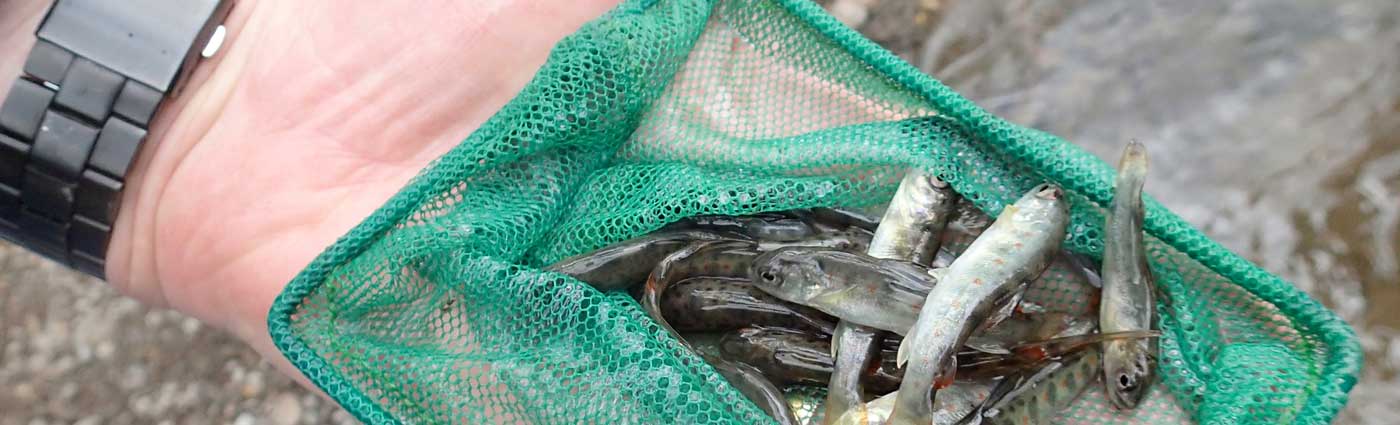
Locally, TU is an invaluable personal and community resource. Members participate in local stream conservation projects, lend a hand with rewarding youth education programs like “Trout in the Classroom,” and hone and improve their fishing and fly-tying skills through seminars, talks and demonstrations at our monthly meetings and those of local conservation and historical organizations.
Catskill Heritage Brook Trout Study
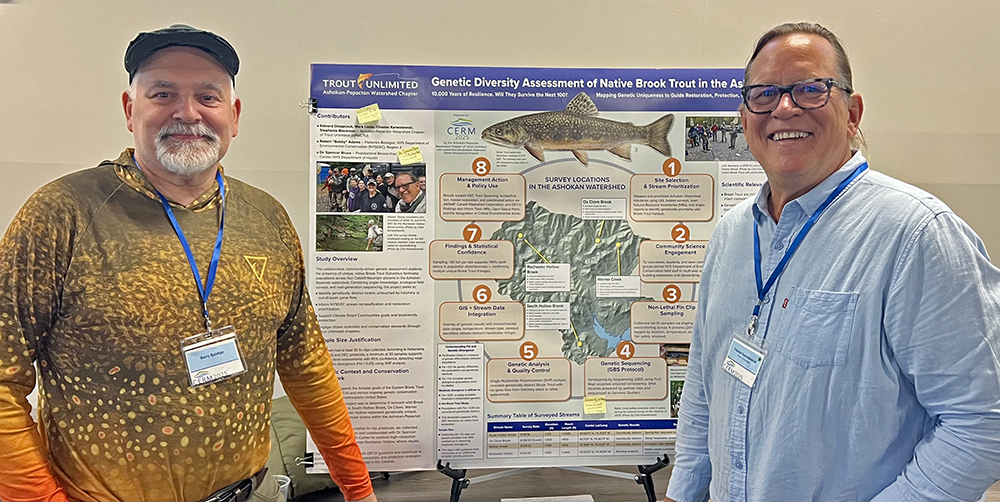
Board Member Chet Karwatowski presented the results of our chapter’s ongoing brook trout project at the recent Catskill Environmental Research & Monitoring (CERM) Conference, held at Belleayre Mountain in October, 2025. Coordinated by the Ashokan Watershed Stream Management Program, the event was well attended; in fact it was sold out. Chet participated in the poster session, with a presentation board designed by Stephanie Blackman. Our poster provided the locations, process, methodology and results of the Catskill Heritage Brook Trout studies our chapter has conducted since 2019.
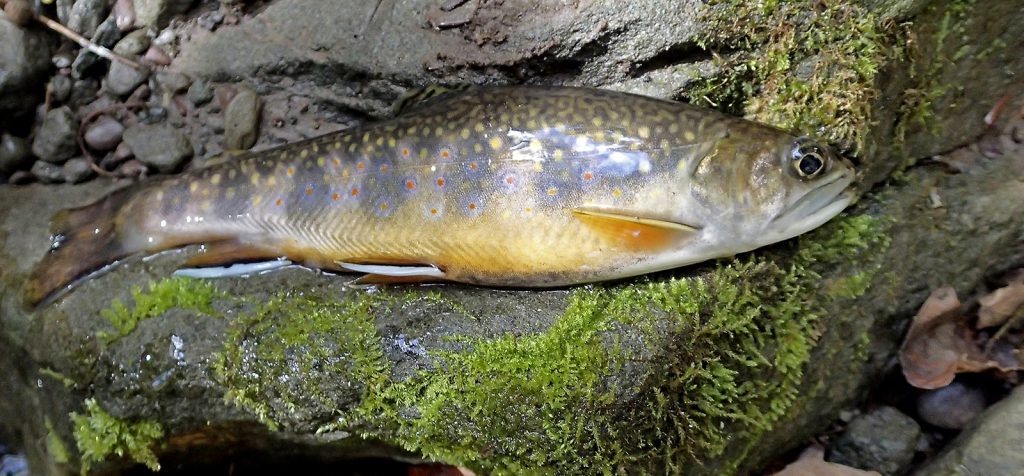
Brook trout, Salvelinus fontinalis, are New York’s official state fish. While technically not a trout at all, but rather a char, it is the only native “trout” to New York. This fish is known by many names: brookie, speckled trout, and squaretail but a few. Generally, the smallest of the various trout and salmon species found in New York, it is the prettiest especially in autumn spawning colors.
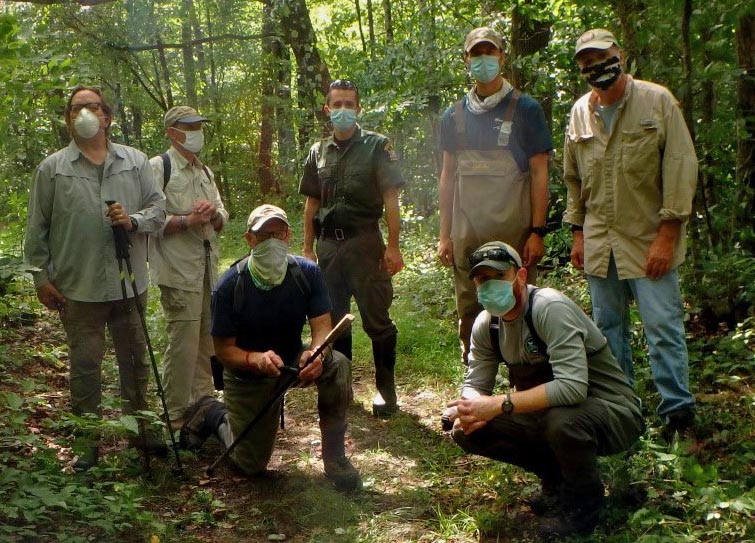
In recent years the original range of brook trout has been threatened by competition from other fish species, climate change, and habitat degradation. Yet a wild, heritage strain remains a timeless link to the state’s original fauna. As such, the Ashokan-Pepacton Watershed Chapter has undertaken studies within the Esopus Creek watershed to document the existence of Catskill heritage brook trout. One study goal was to document their existence so that efforts affording their continued survival could be instituted. These studies were done with partnerships involving the Ashokan Watershed Stream Management Program (AWSMP), plus in one case, the New York State Department of Environmental Conservation (NYS DEC) Region 3 Fisheries as part of their Eastern Brook Trout Joint Venture surveys.
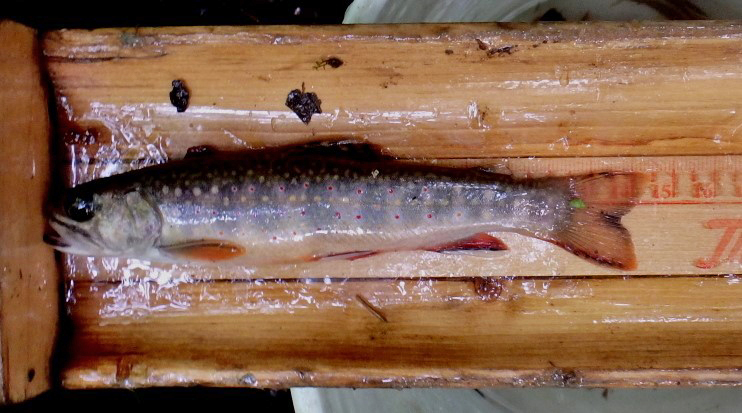
In each study undertaken to date, a permit collect wildlife was obtained from NYS DEC so that fin-clip samples could be taken from trout captured. The DNA of the samples was then analyzed by Spencer A. Bruce, Ph.D. State University of New York at Albany. Dr. Bruce is a Postdoctoral Research Associate and noted for his work in analyzing the genetics of New York state brook trout.
From June 2019 through November 2024, four studies were conducted and fin clippings were taken by chapter members who fly fished the stream and caught the trout on a fly, assisted in later outings by personnel and electrofishing equipment from the NYS DEC. Four studies have been conducted so far in four different streams — Oxclove Brook, Rochester Hollow, South Hollow Brook and Warner Creek. To date, three of the four sets of samples have been analyzed and the DNA results have confirmed (with 95% confidence) multiple unique Brook Trout lineages..
Read the results of the study from Dr. Spencer Bruce, Ph.D.
“Given the degree to which humans have altered regional landscapes by transforming local watersheds by either intentionally or unintentionally enhancing the mobility of non-native species, conserving diversity at all hierarchical levels, from genetic diversity within populations to the diversity of assemblages across aquatic drainages is essential to the continued livelihood of cold-water fish species. In the absence of major adaptations to policy, the ongoing influence of anthropogenic disturbances will continue to have a pronounced effect on biodiversity across the globe (Chapin et al. 2000).
Through Trout Unlimited’s involvement and the use of current genetic techniques, we have demonstrated that the Brook Trout population [sampled] (i) does not exhibit signs of population structure within the sampled stretch, suggesting that landscape features within this watershed may be isolating the population from other distinct strains and/or stocked fish, (ii) That the [brook trout] population is genetically unique compared to other native New York strains, although it is more closely related to nearby native strains rather than fish from other geographically distinct regions, and (iii) that [the brook trout] exhibit no signs of mixing with stocked strains despite historical stocking in the wider region. This leads us to conclude that the [brook trout] population is composed of native fish likely uniquely suited to their regional habitat and should therefore should be considered for the same level of protection as other ‘heritage’ strain Brook Trout present in the Northeastern United States, in order to ensure their future viability and protect their novel genetic constitution.”
The study was covered in TU National’s blog as well, below:
Activities on the East Branch of the Delaware
Chapter members have been actively involved in the restoration and preservation of the East Branch Delaware River wild trout fishery upstream of New York City’s Pepacton Reservoir since 2016. The chapter’s committee — inspired and led by the trio of Len Millen, George Markos, and Peter Marx — has involved numerous members on a variety of projects including stream temperature monitoring, riparian planting, cooperating with NYS DEC Region 4 Fisheries on fish tagging/movement, and assessing trout barriers.
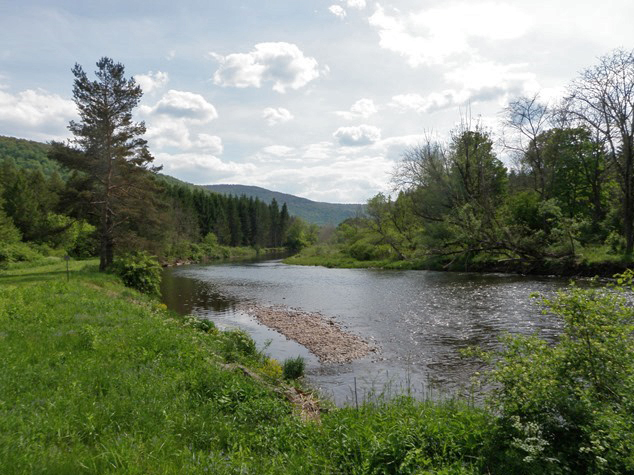
We have been ably assisted by Trout Unlimited National under the talented leadership of Tracy Brown, NY/CT Restoration Manager, and Caroline Shafer, a New York Field Technician. We’ve also worked closely with the Delaware County Soil and Water Conservation District in numerous stream-side plantings.
A 22 page report (TU-EBTHIP-SMIP), prepared by Tracy Brown, can be downloaded from an article that appeared in TU National’s online magazine. It’s full of graphs, charts, and other data gathered thus far from chapter activities.
Additionally, Peter Marx is the chapter’s representative to the Coalition for the Delaware River Watershed, an umbrella organization uniting 163 groups working throughout the region to enhance/advocate for protecting and restoring the Delaware River Basin. Information on the CDRW can be found on their website at delriverwatershed.org/.
Photo at top by Mark Loete.